

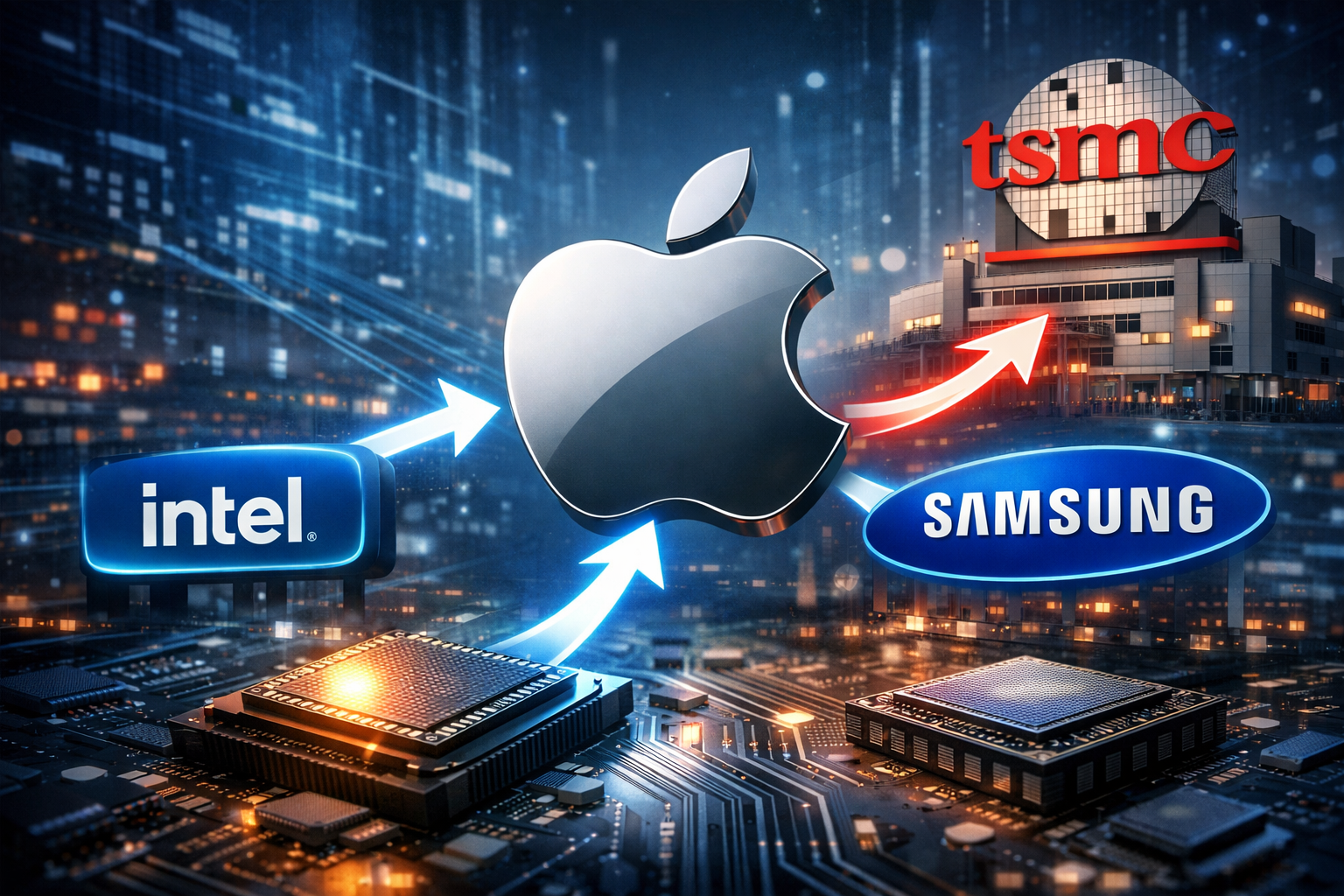
Apple Rethinks Its Chip Strategy as the AI Era Changes the Game
For more than a decade, Apple and TSMC have worked like best friends. Since 2012, Apple has depended almost entirely on Taiwan Semiconductor Manufacturing Company (TSMC) to make its iPhone and iPad processors. But now, according to The Wall Street Journal, Apple is thinking of changing this long-standing setup and honestly, it makes total sense given how fast the chip world is moving.
This possible shift is not about drama or breaking trust. It’s about survival, cost control, and staying ahead in an industry that’s being completely reshaped by artificial intelligence.
Why Apple Is Considering a Big Change
The biggest reason behind this rethink is AI. The AI boom has exploded demand for high-end chips, and companies like NVIDIA are leading that charge. In fact, NVIDIA has now overtaken Apple as TSMC’s largest customer, grabbing a major share of advanced chip-making capacity.
Simply put, AI companies are booking up TSMC’s best factories fast.
For Apple, this means tougher competition for production slots, especially when launching new iPhones every year. And bhai, Apple can’t afford delays even a small supply issue can mess up global launches, including in India.
You can read more details in this analysis here: https://www.perplexity.ai/page/apple-explores-chip-suppliers-hTy1RzJ6SMqGtqMCVcv_BQ�
Rising Costs Are Hitting Apple’s Margins
Another headache for Apple is rising memory prices. Big memory suppliers like Samsung and SK Hynix have increased prices, which directly pushes up Apple’s manufacturing costs.
Now think from Apple’s POV if chip costs go up and iPhone prices can’t be raised too much (Indian customers are already price-sensitive, yaar), margins start getting squeezed. That’s bad news for any company, even one as rich as Apple.
This cost pressure is one more reason Apple is exploring alternative chip suppliers, especially for non-Pro and low-end iPhone models.
Intel Enters the Picture
Here’s where things get interesting. Analysts believe Intel could start manufacturing chips for Apple’s non-Pro iPhones using its upcoming 14A process as early as 2028.
This doesn’t mean Apple will dump TSMC overnight. Not at all. TSMC will likely continue handling high-end, cutting-edge chips. But Intel could help Apple with volume production at lower costs a solid jugaad to balance quality and pricing.
For Intel, this is also a big comeback opportunity in contract chip manufacturing.
What This Means for Apple and the Industry
By diversifying its supply chain, Apple is playing smart cricket, not T20 slogging. The goal is simple:
Reduce dependency on one supplier
Secure enough production capacity
Keep costs under control
The AI era has changed everything. Chip capacity is the new gold, and companies that don’t plan ahead will struggle.
For Indian consumers, this could eventually mean better supply stability and maybe even more competitively priced iPhones in the long run. No guarantees, but fingers crossed.
Final Thoughts
Apple’s move is not about breaking a 12-year tradition it’s about adapting to reality. With AI reshaping the semiconductor world, flexibility is key.
As they say, jo time ke saath nahi badla, woh peeche reh gaya.
You may also read: How One ‘Yes’ Took an Employee From ₹15 LPA to ₹90 LPA| Every IT Professional Must Read!
Reuters investigation: https://www.reuters.com/business/energy/bangladesh-panel-says-adani-power-deal-overpriced-flags-procedural-flaws-2026-01-26/
Microsoft Cuts 9,000 Jobs, Then Posts an AI-Generated Image to Hire New Staffhttps://fresheroffcamp.in/wp-admin/post.php?post=3010&action=edit














Leave a Reply